40 common French phrases to speak like a native: daily examples
Temps de lecture : 10 minutes
:gb: In short: Learn 40 natural French phrases to react, give your opinion, ask for help and speak in everyday situations.
To speak naturally, learn complete phrases, not isolated words.
These 40 expressions are short, frequent and easy to reuse in real conversations.
:books: To practise speaking
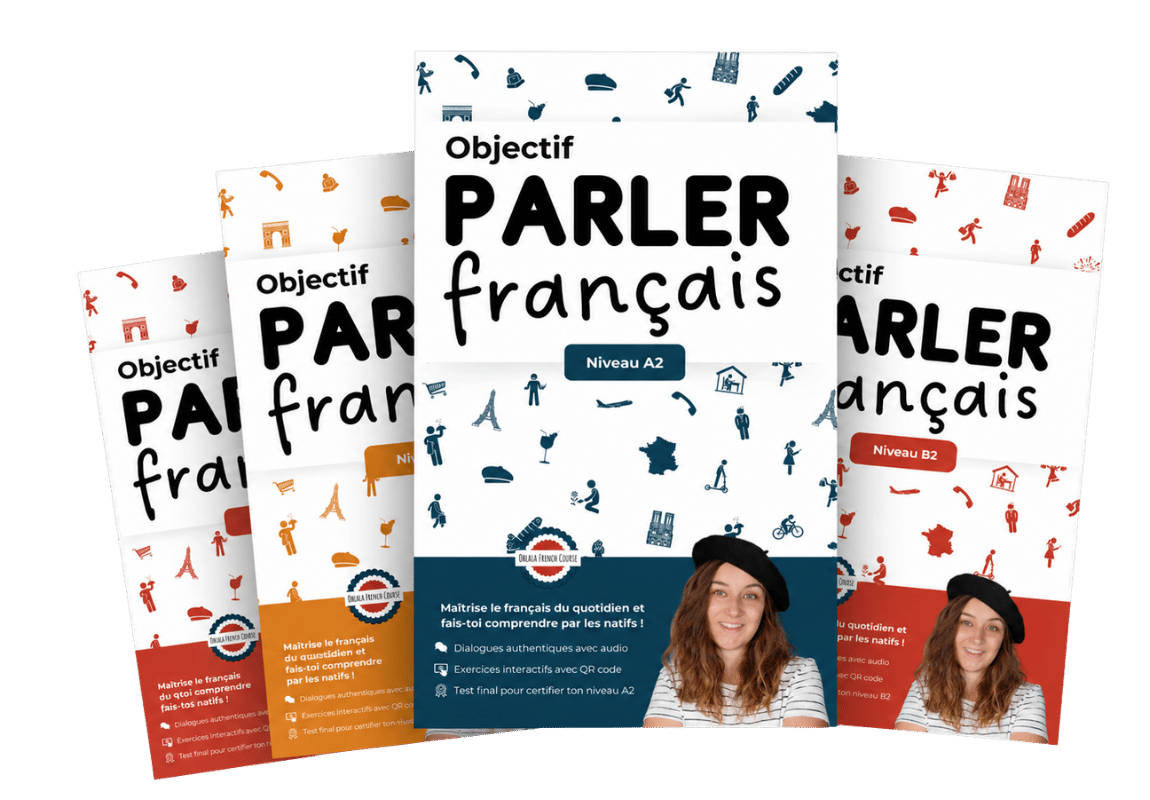
With Objectif : Parler Français, you learn vocabulary and grammar through concrete situations, natural dialogues, native audio, shadowing and speaking practice.
The 40 phrases to know
1. Bonjour, comment ça va ?
Meaning : a natural ready-to-use French sentence for everyday conversation.
Example : Bonjour, comment ça va ?
Tip : Repeat it aloud, then adapt it to your own situation.
2. Salut, quoi de neuf ?
Meaning : a natural ready-to-use French sentence for everyday conversation.
Example : Salut, quoi de neuf ?
Tip : Repeat it aloud, then adapt it to your own situation.
3. Tu fais quoi aujourd’hui ?
Meaning : a natural ready-to-use French sentence for everyday conversation.
Example : Tu fais quoi aujourd’hui ?
Tip : Repeat it aloud, then adapt it to your own situation.
4. Tu as passé un bon week-end ?
Meaning : a natural ready-to-use French sentence for everyday conversation.
Example : Tu as passé un bon week-end ?
Tip : Repeat it aloud, then adapt it to your own situation.
5. Ça fait longtemps !
Meaning : a natural ready-to-use French sentence for everyday conversation.
Example : Ça fait longtemps !
Tip : Repeat it aloud, then adapt it to your own situation.
6. Enchanté(e).
Meaning : a natural ready-to-use French sentence for everyday conversation.
Example : Enchanté(e).
Tip : Repeat it aloud, then adapt it to your own situation.
7. Tu viens souvent ici ?
Meaning : a natural ready-to-use French sentence for everyday conversation.
Example : Tu viens souvent ici ?
Tip : Repeat it aloud, then adapt it to your own situation.
8. Je suis content(e) de te voir.
Meaning : a natural ready-to-use French sentence for everyday conversation.
Example : Je suis content(e) de te voir.
Tip : Repeat it aloud, then adapt it to your own situation.
9. On se connaît déjà ?
Meaning : a natural ready-to-use French sentence for everyday conversation.
Example : On se connaît déjà ?
Tip : Repeat it aloud, then adapt it to your own situation.
10. Tu habites dans le coin ?
Meaning : a natural ready-to-use French sentence for everyday conversation.
Example : Tu habites dans le coin ?
Tip : Repeat it aloud, then adapt it to your own situation.
11. Ça marche.
Meaning : a natural ready-to-use French sentence for everyday conversation.
Example : Ça marche.
Tip : Repeat it aloud, then adapt it to your own situation.
12. Pas de souci.
Meaning : a natural ready-to-use French sentence for everyday conversation.
Example : Pas de souci.
Tip : Repeat it aloud, then adapt it to your own situation.
13. Je vois.
Meaning : a natural ready-to-use French sentence for everyday conversation.
Example : Je vois.
Tip : Repeat it aloud, then adapt it to your own situation.
14. Ah bon ?
Meaning : a natural ready-to-use French sentence for everyday conversation.
Example : Ah bon ?
Tip : Repeat it aloud, then adapt it to your own situation.
15. C’est vrai ?
Meaning : a natural ready-to-use French sentence for everyday conversation.
Example : C’est vrai ?
Tip : Repeat it aloud, then adapt it to your own situation.
16. Sérieusement ?
Meaning : a natural ready-to-use French sentence for everyday conversation.
Example : Sérieusement ?
Tip : Repeat it aloud, then adapt it to your own situation.
17. Tant mieux !
Meaning : a natural ready-to-use French sentence for everyday conversation.
Example : Tant mieux !
Tip : Repeat it aloud, then adapt it to your own situation.
18. Tant pis.
Meaning : a natural ready-to-use French sentence for everyday conversation.
Example : Tant pis.
Tip : Repeat it aloud, then adapt it to your own situation.
19. C’est dommage.
Meaning : a natural ready-to-use French sentence for everyday conversation.
Example : C’est dommage.
Tip : Repeat it aloud, then adapt it to your own situation.
20. Ça arrive.
Meaning : a natural ready-to-use French sentence for everyday conversation.
Example : Ça arrive.
Tip : Repeat it aloud, then adapt it to your own situation.
21. Je suis d’accord.
Meaning : a natural ready-to-use French sentence for everyday conversation.
Example : Je suis d’accord.
Tip : Repeat it aloud, then adapt it to your own situation.
22. Je ne suis pas d’accord.
Meaning : a natural ready-to-use French sentence for everyday conversation.
Example : Je ne suis pas d’accord.
Tip : Repeat it aloud, then adapt it to your own situation.
23. Je ne suis pas sûr(e).
Meaning : a natural ready-to-use French sentence for everyday conversation.
Example : Je ne suis pas sûr(e).
Tip : Repeat it aloud, then adapt it to your own situation.
24. À mon avis...
Meaning : a natural ready-to-use French sentence for everyday conversation.
Example : À mon avis...
Tip : Repeat it aloud, then adapt it to your own situation.
25. Je pense que...
Meaning : a natural ready-to-use French sentence for everyday conversation.
Example : Je pense que...
Tip : Repeat it aloud, then adapt it to your own situation.
26. Je trouve que...
Meaning : a natural ready-to-use French sentence for everyday conversation.
Example : Je trouve que...
Tip : Repeat it aloud, then adapt it to your own situation.
27. Franchement...
Meaning : a natural ready-to-use French sentence for everyday conversation.
Example : Franchement...
Tip : Repeat it aloud, then adapt it to your own situation.
28. Pour être honnête...
Meaning : a natural ready-to-use French sentence for everyday conversation.
Example : Pour être honnête...
Tip : Repeat it aloud, then adapt it to your own situation.
29. Ça dépend.
Meaning : a natural ready-to-use French sentence for everyday conversation.
Example : Ça dépend.
Tip : Repeat it aloud, then adapt it to your own situation.
30. Tu marques un point.
Meaning : a natural ready-to-use French sentence for everyday conversation.
Example : Tu marques un point.
Tip : Repeat it aloud, then adapt it to your own situation.
31. Tu peux répéter ?
Meaning : a natural ready-to-use French sentence for everyday conversation.
Example : Tu peux répéter ?
Tip : Repeat it aloud, then adapt it to your own situation.
32. Tu peux parler plus lentement ?
Meaning : a natural ready-to-use French sentence for everyday conversation.
Example : Tu peux parler plus lentement ?
Tip : Repeat it aloud, then adapt it to your own situation.
33. Je n’ai pas compris.
Meaning : a natural ready-to-use French sentence for everyday conversation.
Example : Je n’ai pas compris.
Tip : Repeat it aloud, then adapt it to your own situation.
34. Comment on dit ça en français ?
Meaning : a natural ready-to-use French sentence for everyday conversation.
Example : Comment on dit ça en français ?
Tip : Repeat it aloud, then adapt it to your own situation.
35. Qu’est-ce que ça veut dire ?
Meaning : a natural ready-to-use French sentence for everyday conversation.
Example : Qu’est-ce que ça veut dire ?
Tip : Repeat it aloud, then adapt it to your own situation.
36. Tu peux me corriger ?
Meaning : a natural ready-to-use French sentence for everyday conversation.
Example : Tu peux me corriger ?
Tip : Repeat it aloud, then adapt it to your own situation.
37. J’ai oublié le mot.
Meaning : a natural ready-to-use French sentence for everyday conversation.
Example : J’ai oublié le mot.
Tip : Repeat it aloud, then adapt it to your own situation.
38. Je cherche mes mots.
Meaning : a natural ready-to-use French sentence for everyday conversation.
Example : Je cherche mes mots.
Tip : Repeat it aloud, then adapt it to your own situation.
39. Je voulais dire...
Meaning : a natural ready-to-use French sentence for everyday conversation.
Example : Je voulais dire...
Tip : Repeat it aloud, then adapt it to your own situation.
40. C’est plus clair maintenant.
Meaning : a natural ready-to-use French sentence for everyday conversation.
Example : C’est plus clair maintenant.
Tip : Repeat it aloud, then adapt it to your own situation.
Ready to speak with the right words, naturally?
Join Ohlala French School and turn vocabulary into real, confident conversations.
Start your 7-day free trial