The Best Books to Learn French: How to Choose a Method That Really Helps You Speak
Reading time: 15 min
Table of contents
- Why do some French books not help you speak?
- The real problem with traditional methods
- How to recognize a good book to learn French
- Why starting from communication changes everything
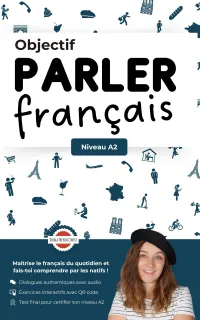
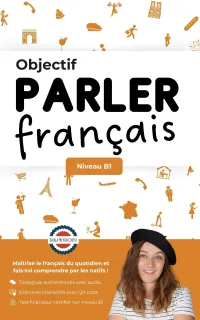
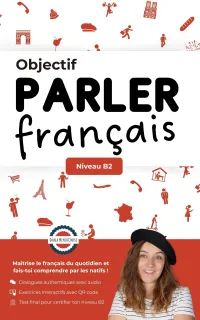
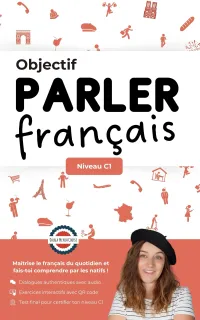
- Objectif : Parler Français, a collection designed for speaking
- What you actually find inside the books
- Which book should you choose according to your level?
- Who are these books for?
- Common mistakes when choosing a French book
- Key takeaway
- FAQ
- Discover Objectif : Parler Français books
Not all French books are equal.
Some books help you understand grammar.
Some books help you memorize vocabulary.
Some books help you complete exercises.
But the real question is:
Does your French book really help you speak?
Because many learners have the same problem.
They understand French.
They know rules.
They have already done exercises.
But when it is time to speak with a native French speaker, they freeze.
The words are in their head.
The grammar is somewhere in their memory.
But nothing comes out naturally.
The real goal:
Not just to learn French.
But to learn how to use French.
In a real conversation.
With real people.
In real situations.
In this article, we will see how to choose the best books to learn French.
Not only the most famous ones.
Not only the most academic ones.
But the ones that can truly help you improve your speaking skills.
And I will also introduce you to the collection Objectif : Parler Français, which I created to answer one very specific problem:
“I understand French, but I can’t speak.”
Why do some French books not help you speak?
A French book can be very serious.
Very complete.
Very well organized.
And still not help you speak naturally.
Why?
Because many books start from grammar.
For example, a chapter is called:
“The subjunctive”
You read an explanation.
You see a conjugation table.
You do exercises.
You complete sentences.
And in the end, maybe you know the rule better.
But can you really use the subjunctive in a natural conversation?
Not always.
Because there is a big difference between:
- recognizing a rule in an exercise,
- and using that rule when you speak with someone.
In a conversation, everything goes fast.
You have to think about what you want to say.
You have to listen to the other person.
You have to answer.
You have to manage your stress.
And you do not have time to mentally search for a rule in a table.
The problem is not your memory.
The problem is often the approach.
Your brain does not only need information.
It needs to associate the language with real situations.
The real problem with traditional methods
Traditional methods are not useless.
They can help you understand the language.
They can help you learn structures.
They can help you write more correctly.
But for speaking, they often have one major limit.
They start from the rule and move toward communication.
But in real life, we often do the opposite.
First, we have something to say.
Then we look for the words and structures to say it.
Important question:
Do we start from grammar to move toward communication?
Or do we start from communication to discover how grammar helps us?
These two approaches are very different.
And they do not produce the same results.
If you learn grammar only as a list of rules, you may develop very intellectual knowledge.
You can explain.
You can recognize.
But you cannot necessarily speak.
To speak, you need to build automatic reflexes.
And automatic reflexes are built with language in context, listening, repetition and oral practice.
Do you want to learn with a method designed for speaking?
The collection Objectif : Parler Français was created to help you use French in real situations.
Natural dialogues, native audio, vocabulary in context, useful grammar and oral practice.
How to recognize a good book to learn French
A good book to learn French should not only give you rules.
It should help you use the language.
Here are the important criteria.
1. Real communication situations
The book should prepare you for situations you can really experience: introducing yourself, telling a memory, giving your opinion, talking about work, expressing an emotion, debating, adding nuance.
2. Natural dialogues
Dialogues should not sound like artificial textbook sentences. They should show how French people really speak.
3. Native audio
Reading is not enough. To speak, you need to hear rhythm, intonation, liaisons, contractions and natural pronunciation.
4. Vocabulary in context
Learning isolated word lists is rarely effective. You need to see how words live inside a sentence.
5. Useful grammar
Grammar should answer a concrete question: “How do I say what I want to say in this situation?”
6. Oral practice
If your goal is to speak, the book should make you speak. Not just read, underline and fill in blanks.
A good book should not only fill your head.
It should train your mouth.
It should get your brain used to producing French.
And it should give you confidence in concrete situations.
Why starting from communication changes everything
Imagine you want to learn how to express emotions in French.
A traditional method may start with a grammar lesson:
“The subjunctive after expressions of feeling.”
That is correct.
But it is not always the best starting point for speaking.
A communication-based approach starts differently:
You are with French friends.
You are talking about something that happened recently.
You want to say that you are happy, worried, surprised or disappointed.
In this situation, you need sentences like:
- Je suis content que tu sois là.
- J’ai peur qu’il soit trop tard.
- Je regrette qu’on n’ait pas eu le temps.
And here, the subjunctive appears naturally.
Not as an abstract rule.
But as a tool.
A tool to express exactly what you feel.
Grammar is not the goal.
Grammar is the tool.
The real goal is communication.
This philosophy is at the heart of Objectif : Parler Français.
We do not start with a rule and then imagine a situation.
We start with a real situation.
Then we discover the language tools that help you live that situation in French.
Objectif : Parler Français, a collection designed for speaking
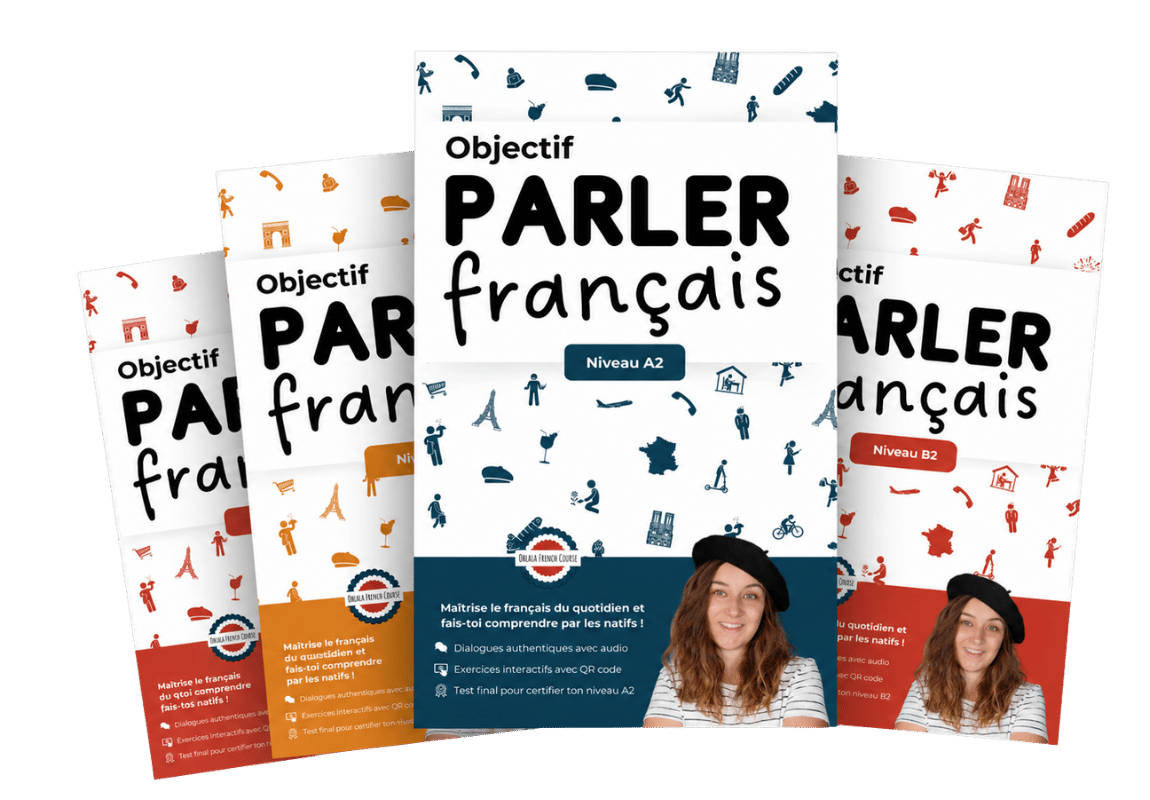
Objectif : Parler Français is a book collection I created for learners who truly want to speak French.
Not just understand.
Not just read.
Not just do exercises.
But speak.
Express their thoughts.
Tell their experiences.
Give their opinion.
Understand native French speakers.
And feel more comfortable in a real conversation.
The collection includes four levels:
- A2: to consolidate the basics and start speaking more easily.
- B1: to tell stories, explain, give your opinion and become more independent.
- B2: to add nuance, debate, express emotions and talk about more complex topics.
- C1: to speak with precision, master registers and understand implied meaning.
Each book follows the same philosophy:
start from concrete communication situations.
Then build vocabulary, grammar, listening and oral practice around these situations.
Example:
You do not only study a lesson on logical connectors.
You learn to talk about current events, express your opinion and add nuance to your point of view.
And in that context, words like “certes”, “néanmoins”, “d’autant plus que” become useful and natural.
What you actually find inside the books
Each unit is designed to take you from comprehension to oral production.
Here is what you find in the books.
1. A communication situation
Each unit starts with a concrete situation: grocery shopping, telling a memory, expressing an emotion, giving your opinion, debating, talking about culture or handling a formal situation.
2. An authentic dialogue
Not an overly perfect dialogue that nobody would actually say. A natural dialogue with common expressions, spoken French and realistic exchanges.
3. Native audio via QR code
You can listen to the dialogue with real pronunciation, rhythm and intonation. This is essential to improve listening comprehension and pronunciation.
4. Vocabulary in context
Important words and expressions are explained in their usage context. You understand not only what they mean, but also when to use them.
5. Useful grammar tools
Grammar appears to help you communicate. It answers a practical question: “How can I express this idea correctly and naturally?”
6. Shadowing exercises
You repeat out loud. You imitate the rhythm. You practise saying the sentences naturally. The goal is for the structures to become more automatic.
7. Oral practice
At the end, you reuse what you have learned in a real communication situation. The book does not only ask you to understand. It makes you speak.
This last point is essential.
Because to speak French, intellectual knowledge is not enough.
You need automatic reflexes.
And automatic reflexes are built with oral repetition.
Not only with reading.
Do you want to see how the books are organized?
Discover the Objectif : Parler Français collection and choose the level that matches your goals.
Which book should you choose according to your level?
The best book to learn French depends on your current level.
But above all, it depends on what you want to be able to do in French.
Level A2
Choose this level if you already have some basics, but you want to talk more easily about everyday life.
Example situations: talking about your day, grocery shopping, ordering, telling a simple memory, talking about your tastes.
Level B1
Choose this level if you can already have a simple conversation, but you freeze when you need to explain, tell a story or give your opinion.
Example situations: expressing emotions, talking about plans, telling an experience, giving your opinion.
Level B2
Choose this level if you want to speak with more nuance, debate, argue and understand more natural conversations.
Example situations: talking about current events, defending an opinion, explaining a problem, talking about culture and art.
Level C1
Choose this level if you want to gain precision, understand implied meaning, adapt your register and speak with more subtlety.
Example situations: arguing with nuance, using formal or informal registers, understanding humor, reformulating a complex idea.
Quick tip:
If you hesitate between two levels, choose the more comfortable one.
To improve your speaking, it is better to practise fluently than to struggle with every sentence.
Who are these books for?
I prefer to be honest.
These books are not for everyone.
And that is normal.
✅ These books are for you if:
- you understand French, but you freeze when you have to answer;
- you have studied grammar, but you cannot use it naturally;
- you want to speak French, not just read or understand it;
- you want to express your thoughts, emotions and opinions;
- you live in a French-speaking country or want to communicate better with French people;
- you are ready to practise speaking regularly.
❌ These books may not be for you if:
- you are a complete beginner, level A1;
- you are only looking for grammar tables;
- you want a magic shortcut to become bilingual without practising;
- you do not want to speak out loud.
If your only goal is to read rules, this may not be the ideal method.
But if your goal is to speak French more naturally, then this approach can truly help you.
Common mistakes when choosing a French book
Before buying a book to learn French, pay attention to these mistakes.
Mistake 1: choosing a book that is too difficult
If every sentence is a battle, you may get discouraged. A good book should challenge you, but still be usable.
Mistake 2: choosing a book without audio
If you want to speak, you need to listen. Audio is not a bonus. It is essential.
Mistake 3: learning only with written exercises
Written exercises can help, but they do not replace oral production.
Mistake 4: believing a book will speak for you
A book can guide you, structure your learning and give you the right tools. But you need to practise out loud.
Mistake 5: learning isolated words
Learn phrases, expressions and structures in context. It is much more effective for speaking.
The right reflex:
Do not only ask: “Does this book explain French well?”
Ask instead: “Will this book help me use French in my life?”
Key takeaway
The best books to learn French are not only the ones that explain grammar well.
They are the ones that help you move from comprehension to communication.
Remember:
- A good book should start from real situations.
- Grammar should serve communication.
- Native audio is essential to improve speaking.
- Vocabulary should be learned in context.
- Oral practice is necessary.
- The best book is the one you will actually use regularly.
You do not need a book that makes you feel good at exercises.
You need a book that helps you speak.
Even a little.
Even imperfectly.
But with more confidence every day.
FAQ
What is the best book to learn French?
The best book depends on your goal. If you want to speak, choose a book with natural dialogues, native audio, vocabulary in context and oral practice.
Is a book enough to learn how to speak French?
A book can help a lot if it is well designed, but you need to practise out loud. To speak, you need to train your brain and your mouth.
Which level should I choose in Objectif : Parler Français?
If you have the basics, start with A2. If you can already have a simple conversation but often freeze, start with B1. If you want to add nuance and debate, choose B2. If you want more precision and subtlety, choose C1.
Why do the books start at level A2?
Because you need some foundations to fully benefit from the method. If you are a complete beginner, it is better to learn the basics of French first.
How should I use a French book to improve my speaking?
Listen to the audio, repeat out loud, do shadowing, record yourself, then reuse the sentences in your own situations.
Discover Objectif : Parler Français books
I created Objectif : Parler Français because I kept seeing the same frustration in my students.
Motivated people.
Intelligent people.
People who had already studied French.
But who told me:
“I understand, but I can’t speak.”
So I wanted to create books that do not only give knowledge.
But a real method to practise.
A method that starts from communication.
A method that shows how the language works in real life.
A method to learn how to speak, not only how to translate.
Do you want to finally speak French more naturally?
Discover the collection Objectif : Parler Français.
4 levels: A2, B1, B2, C1.
Natural dialogues.
Native audio.
Vocabulary in context.
Useful grammar.
And most importantly, oral practice.
→ Discover Objectif : Parler Français= The best books to learn French are the ones that help you speak.
Not only understand.
Not only memorize.
But use French in your real life.
Ready to follow a method that finally helps you speak?
Join Ohlala French School and build real confidence with structured lessons and daily speaking practice.
Start your 7-day free trial