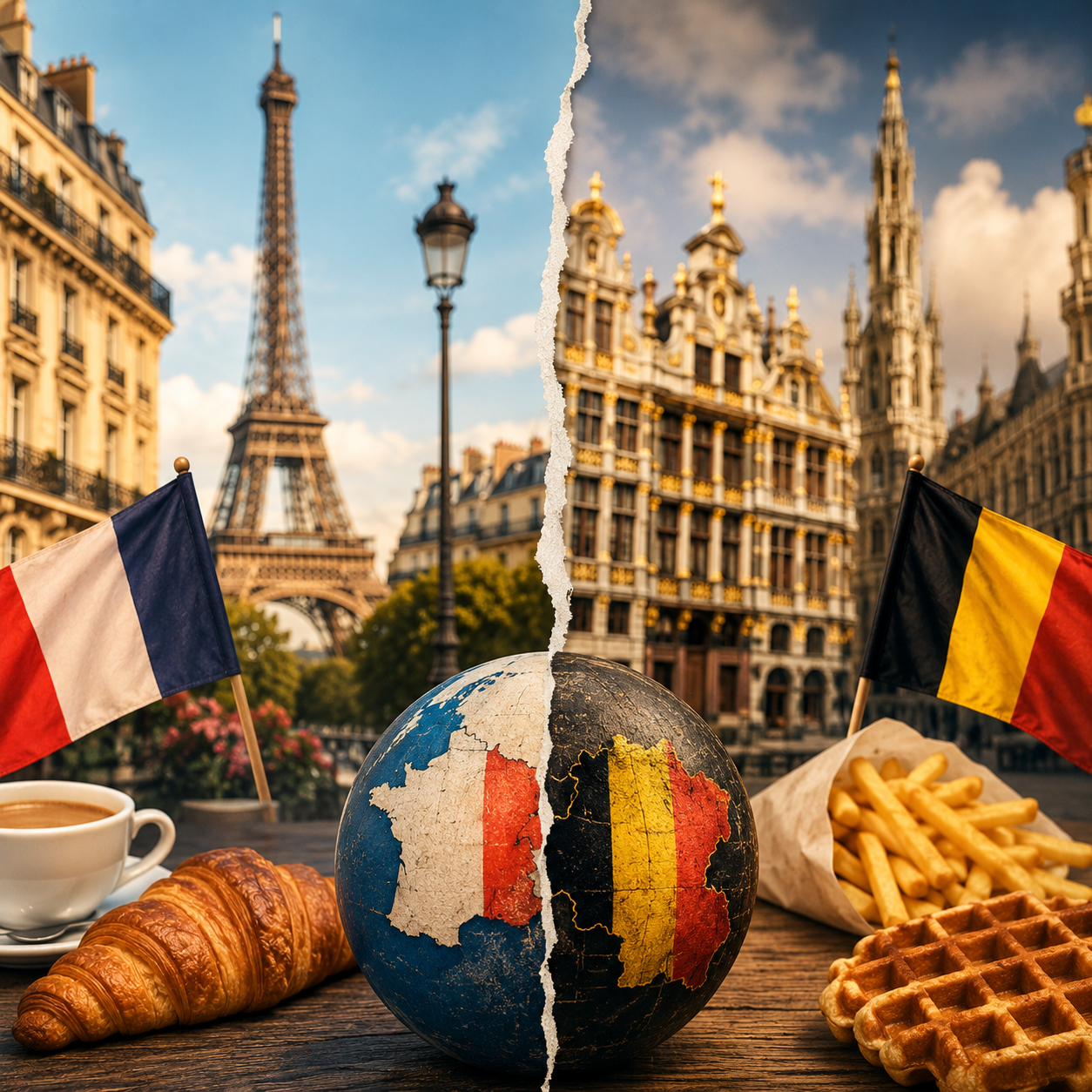
France vs Belgium: 30 common vocabulary differences in French
Temps de lecture : 12 minutes
In short: Discover 30 vocabulary differences between French from France and French from Belgium, with simple examples.
French is not exactly the same everywhere. In Belgium, France, Switzerland, Canada and French-speaking Africa, some words change.
These differences are useful if you travel, watch Belgian videos or speak with French speakers from different countries.
To practise speaking
With Objectif : Parler Français, you learn vocabulary and grammar through concrete situations, natural dialogues, native audio, shadowing and speaking practice.

The 30 differences to know
1. septante
Meaning : In Belgium, people often say “septante”, while in France you will more often hear “soixante-dix”.
Example : Belgium: septante. France: soixante-dix.
Tip : This is not a mistake; it is a regional variety of French.
2. nonante
Meaning : In Belgium, people often say “nonante”, while in France you will more often hear “quatre-vingt-dix”.
Example : Belgium: nonante. France: quatre-vingt-dix.
Tip : This is not a mistake; it is a regional variety of French.
3. un GSM
Meaning : In Belgium, people often say “un GSM”, while in France you will more often hear “un téléphone portable”.
Example : Belgium: un GSM. France: un téléphone portable.
Tip : This is not a mistake; it is a regional variety of French.
4. un kot
Meaning : In Belgium, people often say “un kot”, while in France you will more often hear “un logement étudiant”.
Example : Belgium: un kot. France: un logement étudiant.
Tip : This is not a mistake; it is a regional variety of French.
5. une drache
Meaning : In Belgium, people often say “une drache”, while in France you will more often hear “une grosse pluie”.
Example : Belgium: une drache. France: une grosse pluie.
Tip : This is not a mistake; it is a regional variety of French.
6. un essuie
Meaning : In Belgium, people often say “un essuie”, while in France you will more often hear “une serviette”.
Example : Belgium: un essuie. France: une serviette.
Tip : This is not a mistake; it is a regional variety of French.
7. un bic
Meaning : In Belgium, people often say “un bic”, while in France you will more often hear “un stylo”.
Example : Belgium: un bic. France: un stylo.
Tip : This is not a mistake; it is a regional variety of French.
8. déjeuner
Meaning : In Belgium, people often say “déjeuner”, while in France you will more often hear “petit-déjeuner”.
Example : Belgium: déjeuner. France: petit-déjeuner.
Tip : This is not a mistake; it is a regional variety of French.
9. dîner
Meaning : In Belgium, people often say “dîner”, while in France you will more often hear “déjeuner”.
Example : Belgium: dîner. France: déjeuner.
Tip : This is not a mistake; it is a regional variety of French.
10. souper
Meaning : In Belgium, people often say “souper”, while in France you will more often hear “dîner”.
Example : Belgium: souper. France: dîner.
Tip : This is not a mistake; it is a regional variety of French.
11. une aubette
Meaning : In Belgium, people often say “une aubette”, while in France you will more often hear “un abribus”.
Example : Belgium: une aubette. France: un abribus.
Tip : This is not a mistake; it is a regional variety of French.
12. un torchon
Meaning : In Belgium, people often say “un torchon”, while in France you will more often hear “une serpillière”.
Example : Belgium: un torchon. France: une serpillière.
Tip : This is not a mistake; it is a regional variety of French.
13. une tirette
Meaning : In Belgium, people often say “une tirette”, while in France you will more often hear “une fermeture éclair”.
Example : Belgium: une tirette. France: une fermeture éclair.
Tip : This is not a mistake; it is a regional variety of French.
14. un lavoir
Meaning : In Belgium, people often say “un lavoir”, while in France you will more often hear “une laverie”.
Example : Belgium: un lavoir. France: une laverie.
Tip : This is not a mistake; it is a regional variety of French.
15. une manne
Meaning : In Belgium, people often say “une manne”, while in France you will more often hear “un panier à linge”.
Example : Belgium: une manne. France: un panier à linge.
Tip : This is not a mistake; it is a regional variety of French.
16. un pistolet
Meaning : In Belgium, people often say “un pistolet”, while in France you will more often hear “un petit pain”.
Example : Belgium: un pistolet. France: un petit pain.
Tip : This is not a mistake; it is a regional variety of French.
17. un chicon
Meaning : In Belgium, people often say “un chicon”, while in France you will more often hear “une endive”.
Example : Belgium: un chicon. France: une endive.
Tip : This is not a mistake; it is a regional variety of French.
18. une couque
Meaning : In Belgium, people often say “une couque”, while in France you will more often hear “une viennoiserie”.
Example : Belgium: une couque. France: une viennoiserie.
Tip : This is not a mistake; it is a regional variety of French.
19. une praline
Meaning : In Belgium, people often say “une praline”, while in France you will more often hear “un chocolat”.
Example : Belgium: une praline. France: un chocolat.
Tip : This is not a mistake; it is a regional variety of French.
20. un pain français
Meaning : In Belgium, people often say “un pain français”, while in France you will more often hear “une baguette”.
Example : Belgium: un pain français. France: une baguette.
Tip : This is not a mistake; it is a regional variety of French.
21. ça va ?
Meaning : In Belgium, people often say “ça va ?”, while in France you will more often hear “comment ça va ?”.
Example : Belgium: ça va ?. France: comment ça va ?.
Tip : This is not a mistake; it is a regional variety of French.
22. savoir
Meaning : In Belgium, people often say “savoir”, while in France you will more often hear “pouvoir parfois”.
Example : Belgium: savoir. France: pouvoir parfois.
Tip : This is not a mistake; it is a regional variety of French.
23. tantôt
Meaning : In Belgium, people often say “tantôt”, while in France you will more often hear “tout à l’heure”.
Example : Belgium: tantôt. France: tout à l’heure.
Tip : This is not a mistake; it is a regional variety of French.
24. à tantôt
Meaning : In Belgium, people often say “à tantôt”, while in France you will more often hear “à tout à l’heure”.
Example : Belgium: à tantôt. France: à tout à l’heure.
Tip : This is not a mistake; it is a regional variety of French.
25. une fois
Meaning : In Belgium, people often say “une fois”, while in France you will more often hear “marqueur oral belge”.
Example : Belgium: une fois. France: marqueur oral belge.
Tip : This is not a mistake; it is a regional variety of French.
26. faire la file
Meaning : In Belgium, people often say “faire la file”, while in France you will more often hear “faire la queue”.
Example : Belgium: faire la file. France: faire la queue.
Tip : This is not a mistake; it is a regional variety of French.
27. un auditoire
Meaning : In Belgium, people often say “un auditoire”, while in France you will more often hear “un amphithéâtre”.
Example : Belgium: un auditoire. France: un amphithéâtre.
Tip : This is not a mistake; it is a regional variety of French.
28. bloquer
Meaning : In Belgium, people often say “bloquer”, while in France you will more often hear “réviser intensément”.
Example : Belgium: bloquer. France: réviser intensément.
Tip : This is not a mistake; it is a regional variety of French.
29. un syllabus
Meaning : In Belgium, people often say “un syllabus”, while in France you will more often hear “un polycopié/support de cours”.
Example : Belgium: un syllabus. France: un polycopié/support de cours.
Tip : This is not a mistake; it is a regional variety of French.
30. bourgmestre
Meaning : In Belgium, people often say “bourgmestre”, while in France you will more often hear “maire”.
Example : Belgium: bourgmestre. France: maire.
Tip : This is not a mistake; it is a regional variety of French.
Ready to speak with the right words, naturally?
Join Ohlala French School and turn vocabulary into real, confident conversations.
Start your 7-day free trial