France vs Quebec: 30 French Vocabulary Differences You Need to Know
Reading time: 14 minutes
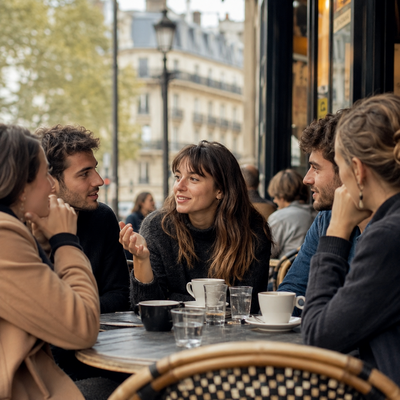
Already comfortable with voiture, déjeuner, and chaussettes? Great. In Quebec, the same ideas may be expressed with char, dîner, and bas. This is neither “bad French” nor a collection of quaint expressions: these are living regional usages shaped by history and everyday life.
Here are 30 practical differences to help you travel, work, and chat without unnecessary misunderstandings. The labels “France” and “Quebec” describe tendencies, not rigid borders: age, region, situation, and register all matter, and several variants often coexist. Your goal is not to imitate at all costs, but to understand and choose a word that fits the context.
Before you start
A Quebec word may be standard, informal, or simply more frequent in Quebec. We flag register whenever it matters. The good news: in most cases, both variants remain understandable on either side of the Atlantic.
Table of contents
- Meals and everyday routines (1–3)
- Technology and going out (4–8)
- Clothing and nature (9–15)
- Shopping and getting around (16–20)
- Purchases, work, and relationships (21–25)
- False friends, school, and university (26–30)
1. France: petit déjeuner · Quebec: déjeuner
The morning meal. In Quebec, déjeuner normally means breakfast; in France, speakers specify petit déjeuner.
Natural example : In Montreal: « On déjeune ensemble avant de partir? » (“Shall we have breakfast together before leaving?”)
2. France: déjeuner · Quebec: dîner
The midday meal. This difference is part of a broader shift in the names used for all three daily meals.
Natural example : In Quebec City: « J'apporte mon dîner au bureau aujourd'hui. » (“I'm bringing my lunch to the office today.”)
3. France: dîner · Quebec: souper
The evening meal. Souper also exists elsewhere in the French-speaking world, but it is especially common in Quebec.
Natural example : « On soupe vers 18 h 30, ça te va? » (“We're having dinner around 6:30 p.m.; does that work for you?”)
4. France: voiture · Quebec: char
A car. Char is very common in spoken Quebec French, but informal; auto and voiture are also readily understood.
Natural example : Among friends: « J'ai laissé mon char près du métro. » (“I left my car near the subway.”)
5. France: téléphone portable · Quebec: téléphone cellulaire
A mobile phone. In conversation, the shortened forms portable in France and cellulaire (or the very informal cell) in Quebec are common.
Natural example : « Peux-tu m'envoyer l'adresse sur mon cellulaire? » (“Can you send the address to my phone?”)
6. France: e-mail / mail · Quebec: courriel
An email message. Courriel, formed from courrier électronique, is the recommended term and is firmly established in Quebec.
Natural example : « Je t'envoie la confirmation par courriel. » (“I'll send you the confirmation by email.”)
7. France: faire du shopping · Quebec: magasiner
To shop or browse in stores. In Quebec, magasiner can also mean comparing offers before making a choice.
Natural example : « On va magasiner un manteau cet après-midi. » (“We're going shopping for a coat this afternoon.”)
8. France: week-end · Quebec: fin de semaine
Saturday and Sunday. Fin de semaine is the traditional Quebec expression, although week-end can also be heard there.
Natural example : « Qu'est-ce que tu fais en fin de semaine? » (“What are you doing this weekend?”)
9. France: baskets · Quebec: espadrilles
Sneakers or athletic shoes. Be careful: in France, an espadrille is usually a light canvas shoe with a rope sole.
Natural example : « Prends tes espadrilles, on va marcher longtemps. » (“Bring your sneakers; we're going to walk a lot.”)
10. France: chaussettes · Quebec: bas
The garment worn on the foot inside a shoe. In France, bas is more likely to suggest stockings or hosiery.
Natural example : « J'ai besoin de bas chauds pour l'hiver. » (“I need warm socks for winter.”)
11. France: pull · Quebec: chandail
A long-sleeved garment worn on the upper body. In Quebec, chandail is broader and can also refer to a top or jersey depending on context.
Natural example : « Mets un chandail, il fait frais dehors. » (“Put on a sweater; it's chilly outside.”)
12. France: maillot de bain · Quebec: costume de bain
A swimsuit. Both expressions are understood, but costume de bain remains widely used in Quebec.
Natural example : « N'oublie pas ton costume de bain pour le chalet. » (“Don't forget your swimsuit for the cottage.”)
13. France: bonnet · Quebec: tuque
A warm knitted hat or beanie. Tuque may sound emblematic of Canada, but it is an entirely ordinary everyday word in Quebec.
Natural example : « Attache ta tuque, il vente fort! » (“Hold on to your hat; it's very windy!”)
14. France: moustique · Quebec: maringouin
A mosquito. Moustique is also common in Quebec; maringouin adds local flavor but is by no means mandatory.
Natural example : « Il y a beaucoup de maringouins près du lac ce soir. » (“There are lots of mosquitoes near the lake tonight.”)
15. France: serpillière · Quebec: vadrouille / moppe
A mop used to wash the floor. Vadrouille is standard; moppe is very common in speech and more informal.
Natural example : « Je vais passer la vadrouille dans la cuisine. » (“I'm going to mop the kitchen floor.”)
You're halfway there! Read the examples aloud: context turns a list of words into vocabulary you can actually retrieve when speaking.

Objectif : Parler Français
Turn vocabulary into real conversation
Want to understand French speakers from different regions—and answer naturally? Train your ear, pronunciation, and speaking reflexes with a method designed for real-life French.
Discover Objectif : Parler Français16. France: supermarché · Quebec: épicerie
The store where groceries are bought. In France, an épicerie is often a smaller shop; in Quebec, the word also covers full-size grocery stores.
Natural example : « Je passe à l'épicerie acheter du lait. » (“I'm stopping at the grocery store to buy milk.”)
17. France: sac en plastique · Quebec: sac de plastique
A bag made of plastic. Quebec French readily uses de to indicate material where French usage in France often prefers en.
Natural example : « Les sacs de plastique à usage unique sont interdits ici. » (“Single-use plastic bags are banned here.”)
18. France: parking · Quebec: stationnement
A place to park or the act of parking. In Quebec, stationnement can refer both to a parking lot and to parking itself.
Natural example : « Le stationnement est gratuit après 18 h. » (“Parking is free after 6 p.m.”)
19. France: feu rouge · Quebec: lumière rouge
A traffic light, especially the red signal. Lumière is common in spoken Quebec French; official wording also uses feu de circulation.
Natural example : « Tourne à droite à la prochaine lumière. » (“Turn right at the next traffic light.”)
20. France: rond-point · Quebec: carrefour giratoire
A roundabout. Carrefour giratoire is the standard official Quebec term, while rond-point remains understandable.
Natural example : « Prenez la deuxième sortie du carrefour giratoire. » (“Take the second exit at the roundabout.”)
21. France: ticket de caisse · Quebec: reçu de caisse
The slip provided after a purchase. In both regions, speakers may also simply say ticket or reçu, depending on context and personal usage.
Natural example : « Gardez votre reçu de caisse pour faire un échange. » (“Keep your receipt in case you need an exchange.”)
22. France: pourboire · Quebec: tip
Money left in addition to the bill for service. Tip is informal and common in spoken Quebec French; pourboire remains the standard term.
Natural example : Among friends: « Tu as laissé combien de tip? » (“How much of a tip did you leave?”)
23. France: petit boulot · Quebec: jobine
A temporary, side, or modest job. Jobine is informal; in professional settings, emploi or travail is preferable.
Natural example : « J'avais une jobine dans un café pendant mes études. » (“I had a little job in a café while I was studying.”)
24. France: copain / petit ami · Quebec: chum
A male friend or romantic partner, depending on context. In Quebec, chum can carry either meaning, so the full sentence matters.
Natural example : « Je vais au cinéma avec mon chum ce soir. » (“I'm going to the movies with my boyfriend tonight.”)
25. France: petite amie · Quebec: blonde
A girlfriend, regardless of her hair color. Blonde is informal; conjointe is more neutral or administrative.
Natural example : « Ma blonde travaille dans le quartier. » (“My girlfriend works in the neighborhood.”)
26. France: gosse · Quebec: enfant
In France, gosse is an informal word for “child.” In Quebec, the vulgar plural gosses refers to testicles, so use enfant, petit, or jeune instead.
Natural example : In Quebec: « Leurs enfants jouent dans le parc. » (“Their children are playing in the park.”)
27. France: faire la queue · Quebec: faire la file
To wait in line. File d'attente is standard throughout the French-speaking world, but the everyday verb phrase often varies by region.
Natural example : « Il faut faire la file devant la billetterie. » (“You have to line up in front of the ticket office.”)
28. France: lycée · Quebec: école secondaire
The school attended by teenagers before higher education. The education systems do not align exactly, so this is a practical comparison rather than a perfect administrative equivalence.
Natural example : « Elle termine son école secondaire cette année. » (“She's finishing high school this year.”)
29. France: fac · Quebec: université
A university. In France, fac is a common spoken abbreviation of faculté; in Quebec, speakers generally say université or, informally, uni.
Natural example : « Il étudie en histoire à l'université. » (“He's studying history at university.”)
30. France: crayon à papier · Quebec: crayon à mine
An erasable graphite pencil. Crayon de bois is also used in parts of France, reminding us that variation exists within each region too.
Natural example : « Remplissez le formulaire au crayon à mine. » (“Fill out the form in pencil.”)
How can you use these differences without stereotyping?
Start by learning to recognize variants when you hear them. If you spend time in Quebec, adopt the ones that feel natural—especially neutral terms such as courriel, stationnement, or faire la file. With informal forms such as char, tip, or jobine, first notice who uses them and in what situation.
Above all, stay curious: people do not speak exactly the same way in Paris, Marseille, Montreal, Quebec City, or the Gaspé Peninsula. Understanding variation means understanding French as it is truly lived—rich, mobile, and diverse.
Objectif : Parler Français
Turn vocabulary into real conversation
Want to understand French speakers from different regions—and answer naturally? Train your ear, pronunciation, and speaking reflexes with a method designed for real-life French.
Discover Objectif : Parler FrançaisReady to speak with the right words, naturally?
Join Ohlala French School and turn vocabulary into real, confident conversations.
Start your 7-day free trial